Other common names:
Bracken Fern, Eastern Bracken Other scientific names: Pteridium latiusculum, Pteris aquilina French names:
Fougère d'aigle commune Family: Bracken Family (Dennstaedtiaceae) Similar species: • Oak Fern (Gymnocarpium dryopteris) - much smaller, grows in deep woods. • Robert's Fern (Gymnocarpium robertianum) - much smaller, uncommon. • Rattlesnake Fern (Botrypus virginianus) - much smaller, stouter for its size; has a central fertile frond sticking straight up. Fronds: Thrice divided Height:
Up to 2 m (1-5 ft) Habitat: Fields and Open Areas; Open areas, fields & meadows. Uses:
Not adviseable to eat this fern.
Edible:
Edible but not adviseable, as it contains carcinogens.
Native/Non-native:
Native Status:
Very common.
Notes:
Can become invasive in certain areas/conditions.
Photographs:
147 photographs available, of which 17 are featured on this page. SCROLL DOWN FOR PHOTOGRAPHS.
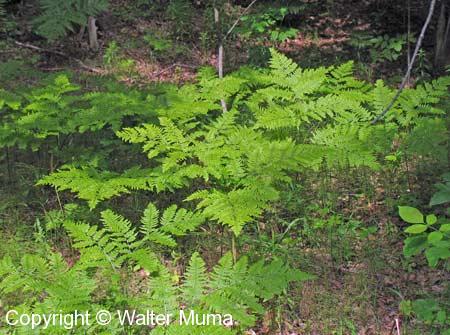
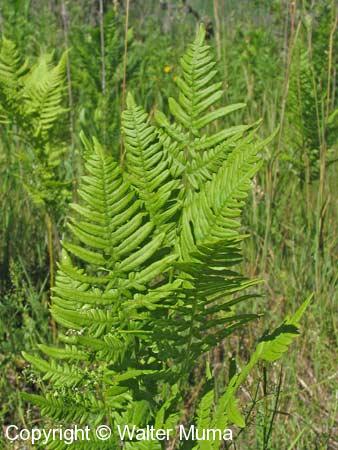
Typical leaves...
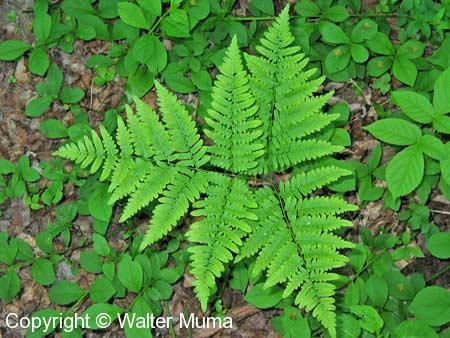
Typical growth form - the leaves form a flat "umbrella".
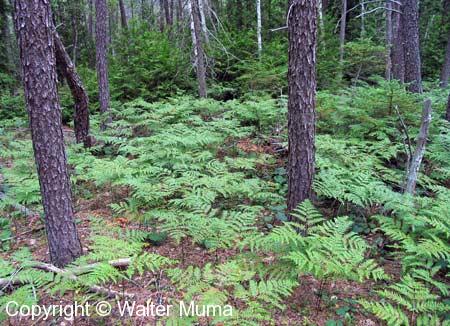
Bracken in an open pine woods.
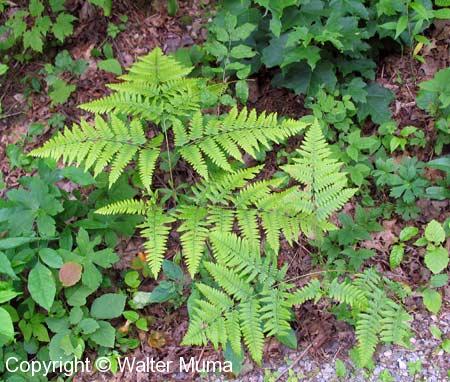
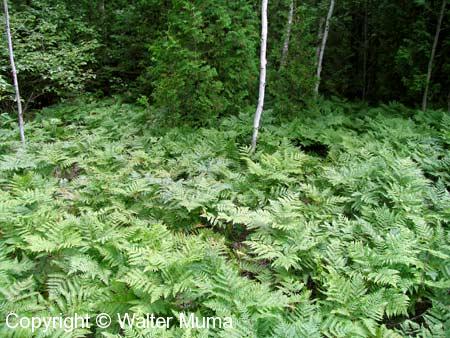
Here Bracken has taken over a clearing.
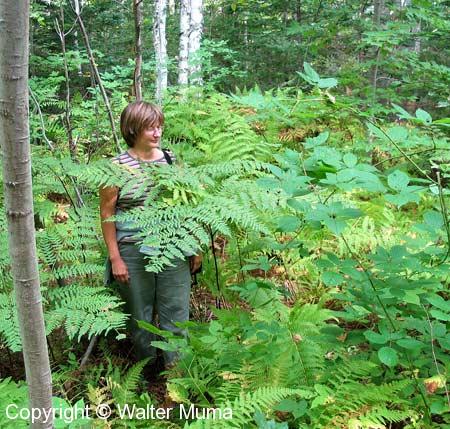
Bracken can grow quite large sometimes, as shown here!
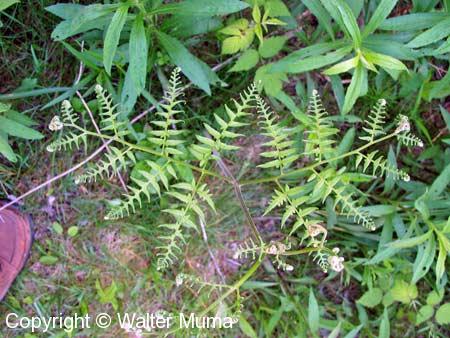
Sometimes Bracken grows in the upright form. Not sure why.
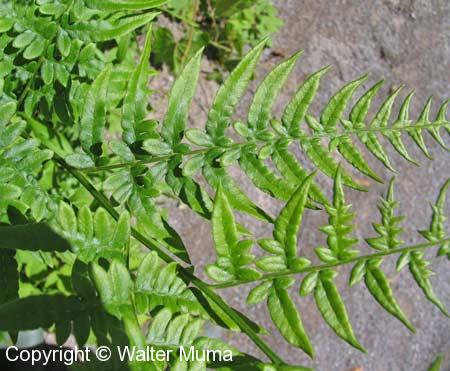
Sometimes the leaflets grow slightly irregularly.
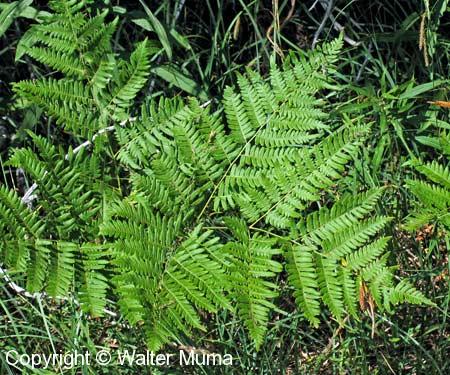
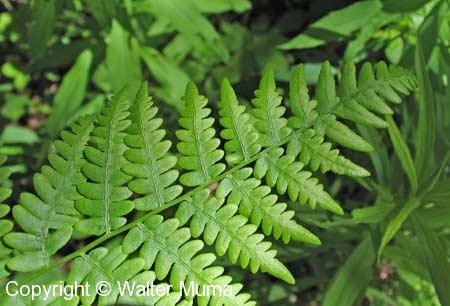
Upper surface of a frond.
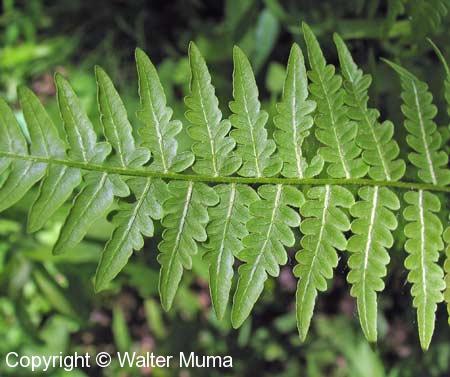
Underside of a frond. Sometimes the margins of the leaflets will curl under very slightly.
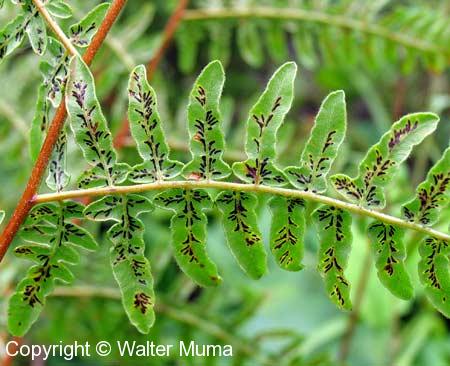
Underside, showing what appears to be the sori, but is in fact insect damage!
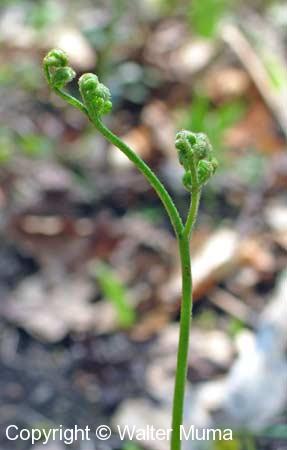
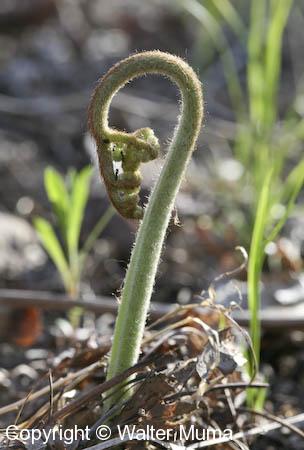
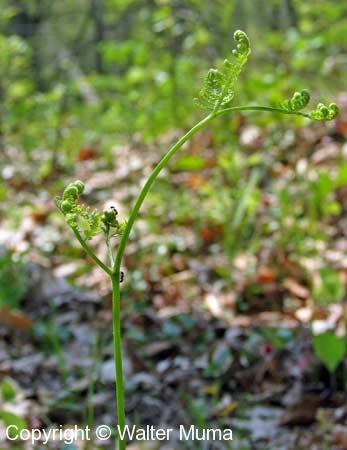
Fiddlehead in the spring (mid-May).
Bracken is not a recommended species of fern to eat. It contains high levels of carcinogens.